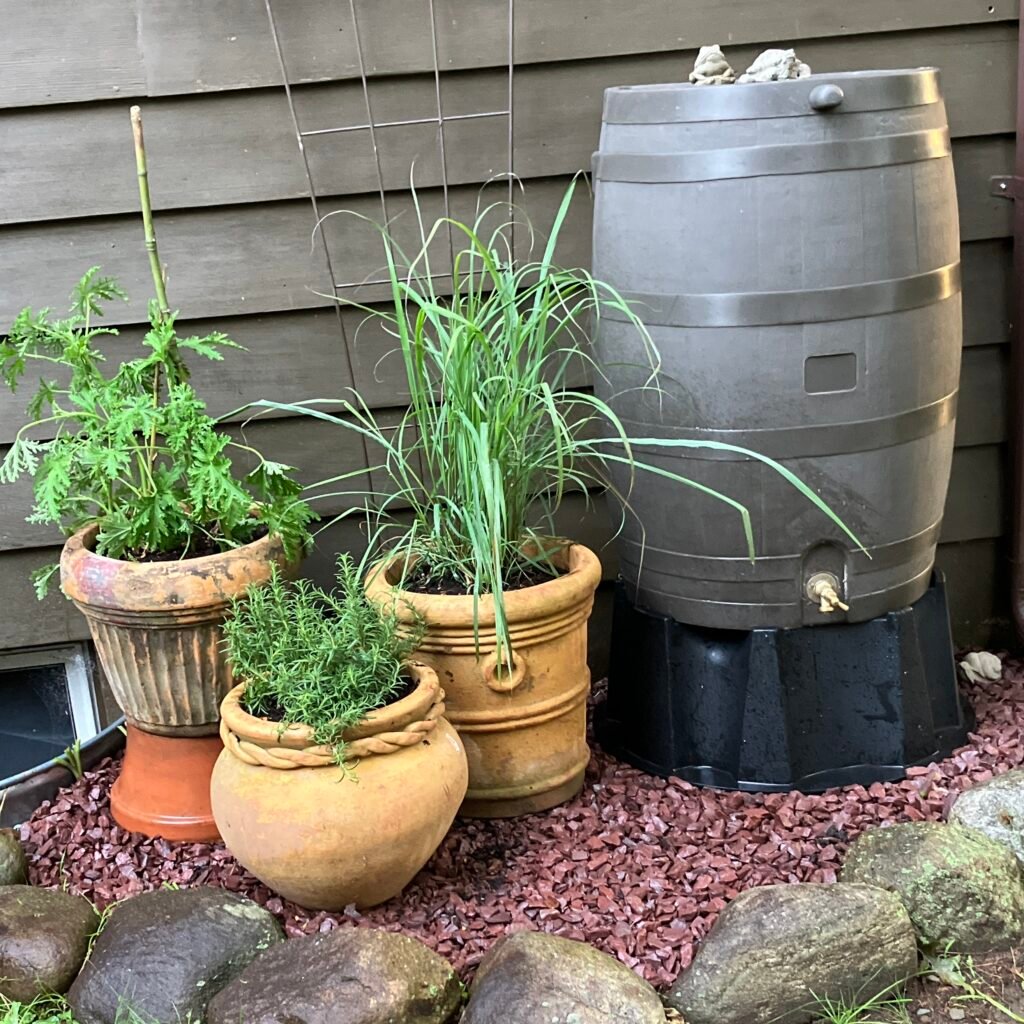
Every garden benefits from a rain barrel.
Rain water should be non-negotiable for your gardens and plants. We can’t rely on our irrigation systems to provide the nutrients our plants need to thrive. A rain barrel in your garden ensures that you will always have nutrient rich water on hand.
Rain water is 100% soft. It is high in oxygen and nitrates. Collected rain, that has likely fallen from your roof, contains natural fertilizers from things like leaves and bird droppings. Organic matter adds nitrogen which acts as a natural fertilizer. Rain water is a much healthier option for your vegetables, flowers and plants. Rain water is free of the salt and chemicals found in municipal water. I was initially motivated to start collecting rain water because it seemed to me that every summer we were (and are) under drought conditions. I was happy to find that the collected rain water does make a noticeable difference in keeping everything lush and thriving. The barrel also adds a nice focal point to an otherwise uninteresting area of my yard.
Ease of set up and use
The 2 things you’ll need:
1. Rain Barrel with Stand: The RTS Home Accents Rain Barrel is the perfect choice.
Here are the highlights.
- 50-Gallon Capacity
- Overflow Valve: This valve also gives you the ability to connect additional barrels
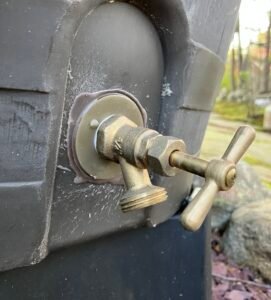
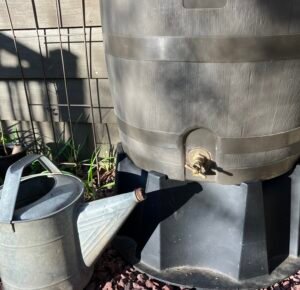
- Brass Spigot: easy to operate and does have threads so it can be hooked up to a hose if needed. Most importantly, it doesn’t leak!
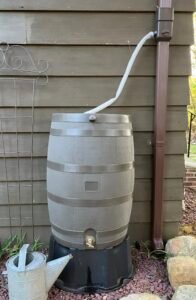
- Stand Included: this raises the barrel off the ground high enough to put a watering can or bucket under the spout.
- Woodbarrel design: looks great in your garden. The woodgrain with black stripes looks like a wine barrel and serves as a stylish focal point as well as a functional piece.
- The back is flat so the barrel fits neatly against the wall.
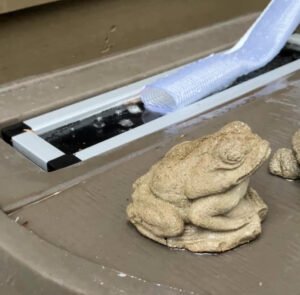
The setup is simple. The brass spigot screws in easily. I used the teflon tape around the threads as an added measure to prevent leaks. The screen sits in the groove on the top to cover the opening. You literally just have to place it there.
If possible, over winter the barrel in your garden shed. Give it a good cleaning in the fall before storage, so set up in the spring will only take minutes. I prefer to store it in my shed rather than covering it with a tarp. Storing it ensures that there will be no pooling water and that it stays clean, free of algae and ready to use at the first sign of spring. The barrel is light enough so moving it isn’t a problem. I find that winter storage, whenever possible, is key to maintaining anything that lives in your garden.
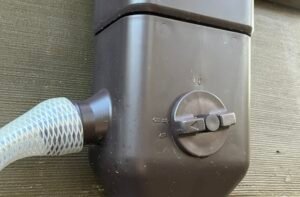
The diverter gives you the ability to manage the water that flows into the barrel. There are 3 options. With the turn of a lever you can direct the flow to high, medium, or turn it off. This allows you to reach full capacity very quickly. The ability to turn the flow off is needed in winter when the barrel is in storage. Turning it to the off position allows the water to flow the full length of the gutter to the ground.
Installation is easy. You’ll need only a hacksaw to cut the gutter. The hose is included and is simple to cut with a scissor to the desired length. The hose can be taken off and stored with the barrel over the winter. Directions for installation are very clear and explain proper placement. A template is included so that you are sure to cut the correct size out of the gutter. It’s available in white or brown. Take a look at my pictures below, I love the way it looks!
Indoor plants
Over time the chemical, salt, and mineral buildup from municipal water will damage your houseplants. Houseplants can also greatly benefit from nutrient rich rain water. In a gentle spring rain I will bring my houseplants outside on my deck and let them soak up some rain for an hour or two. Of course making sure the conditions are right; not too cold, not too windy. It gives them their very own spring cleaning. It cleans their leaves and gives them a boost of natural fertilizer to start the growing season.
I put rain water in a spray bottle to mist indoor plants. When using a spray bottle, the fresher the water the better. The water likely comes from the roof so be sure to strain it with a coffee filter or cloth to filter out any debris.
Water storage
I have a dedicated outdoor storage locker which holds gallon sized jugs of water so I always have some on hand. The rain barrel itself holds 50 gallons and I always have 12 or 15 additional gallon jugs filled and ready. This keeps room in the barrel for the next rain fall. I empty each jug by ⅓ in the winter to account for freezing. In early spring before the barrel is set up I have rainwater for the first warm days of spring.
Concerns about mosquitoes
Any stored water should be in a closed container so that mosquitoes can’t lay their eggs. As for the rain barrel itself, the screen on top keeps the mosquitoes out. If they can’t access the water, they can’t lay their eggs. The simple solution to mosquito control is to use the water frequently. Draining the barrel regularly ensures that any larva that may have found its way in, doesn’t have a chance to live. Keep the barrel clean and free of algae.
Of course, always keep an eye out for larvae as standing water in the heat of summer is the perfect breeding ground for mosquitoes. I also keep potted, large citronella and lemongrass plants next to my rain barrel, it looks great and acts as a natural deterrent.
Setting up a rain barrel is one of the best ways to support your gardens, inside and out. Rain water combined with nutritious soil from compost ensures a successful growing season. Let Mother Nature help with your harvest!

Leave a Reply