Have you been wondering about the surge of bird watching enthusiasts that are popping up on all of your Social feeds? If you’ve been curious about what all the fuss is about I urge you to dive in! Bird watching is not only fascinating but it is simply one of the most accessible hobbies you can enjoy. You can quite literally start by looking out of a window or by stepping into your own backyard to enjoy the show! And the good news is, there is very little equipment needed.
Here are 5 basic necessities to help get you started.
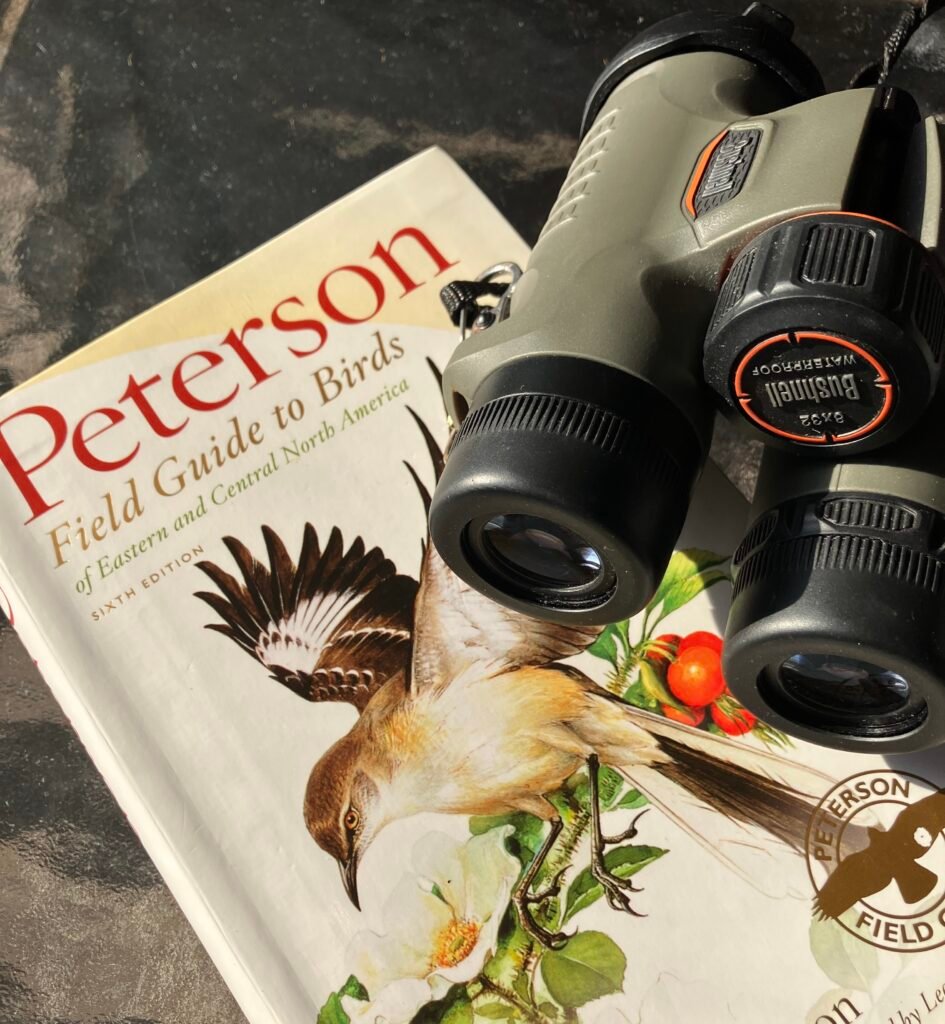
#1 Binoculars. Binoculars are a must. The naked eye can’t show you the beauty and detail that is so fascinating to observe. Watching a Kingfisher on a branch next to the reservoir suddenly becomes awe inspiring as you’re able to watch it dive, grab a fish , bring it back to the branch and gulp it down! Now, having said that, it is easy to go down a very large rabbit hole while deciding which pair is right for you. There are so many options with enormous differences in price. The technical differences regarding the quality of lenses can be overwhelming. As a beginner you should keep it simple, there will be plenty of opportunities to upgrade if you choose. In the meantime stick to your budget. A reputable brand will ensure you make a purchase that will serve you. You may never feel the need to upgrade. Take a look at a few options as the style and aesthetics of each are a very personal choice. Here is a link with some binocular options. These are all reasonably priced, excellent equipment. I travel with an 8×32 pair as they are light, sturdy, waterproof and just small enough to carry in my backpack or kayak so I don’t miss a thing. These all will stand up to rain, mist, salty air etc. (and an occasional drop on the ground!)
Here are some basics regarding binoculars: You may be wondering what magnification is best. The magnification is the 8x or 10x number. This refers to how large the bird will appear. Keep in mind that small birds move around very quickly so an 8x may be a better choice than a 10x magnification. It will be easier to track them in flight. When you see a bird you want to watch, look at the bird and then bring the binoculars up to your eyes. This may not be obvious at first.
The larger number, the objective lens, the x35 or x40 refers to the larger lens. The wider the lens, the more light that gets in, resulting in a brighter image. If I’m not at home I like to use x32 because they are much lighter and much easier to carry around. Also, it’s typically daytime when I’m out watching so the dim lighting of dawn or dusk is not a problem. For those times, the larger x40 are better because of lower light scenarios. The eye relief is the distance between the eye piece and your eye. If you wear glasses you should twist the eye cups down to shorten this distance.The diopter is the wheel mechanism between the lenses that lets you fine tune your focus. Again, this is a quick overview, you can always do a deep dive if you want more technical information.
#2 Field Note notebooks. Field Notes notebooks are a must.They are small enough to carry in your pocket or pack. They let you note things like location, time of day, season, and what the birds are doing. If you can’t readily ID the bird you can note its size, its colors and its markings. You can note if it was on the ground, in a bush, near water, perched high in a tree, noting that different habitats support different species. Maybe you’d like to sketch a picture. All of these observations will help you later to make an ID. Field Note notebooks have many cover designs. You can choose plain craft paper covers or covers with artwork. Most are available with a choice of lined, unlined, or graph pages. I would also recommend a leather cover for your field notes. The cover keeps the notebook and pen together and handy. So many options!
#3 a field research book. A good old fashioned analog book! There are many but my most used favorite is the Peterson Field Guide. It is a classic that stands the test of time. It is published by each region to give you hyper specific information for where you live. This guide is beautifully illustrated, with beautiful paintings showing the shapes and markings of each species. It also pictures their silhouettes. It has Range Maps which show where each species can be found. It is a tremendous resource for a beginner birder. Lastly, it includes a Life List. The most satisfying checklist! Here, you keep track of all the species of birds you have ever seen! Every one of them!
A great digital addition is the Merlin Bird ID app. It can ID birds if you give it a list of observations that you’ve made. It will give you a list of probable birds using things like your description of their appearance and their location. Additionally, this app can ID birds by their sounds.You can literally sit in your backyard and learn what is around by listening to their songs. It’s a fantastic resource and it’s free!
#4 a harness. Do you really need a harness? Yes, you do! And here’s why. A harness keeps the weight of the binoculars on your shoulders, not on your neck. Even the lightest binoculars will put a strain on your neck after just a very short while. A harness ensures that walking any distance will be comfortable and effortless.
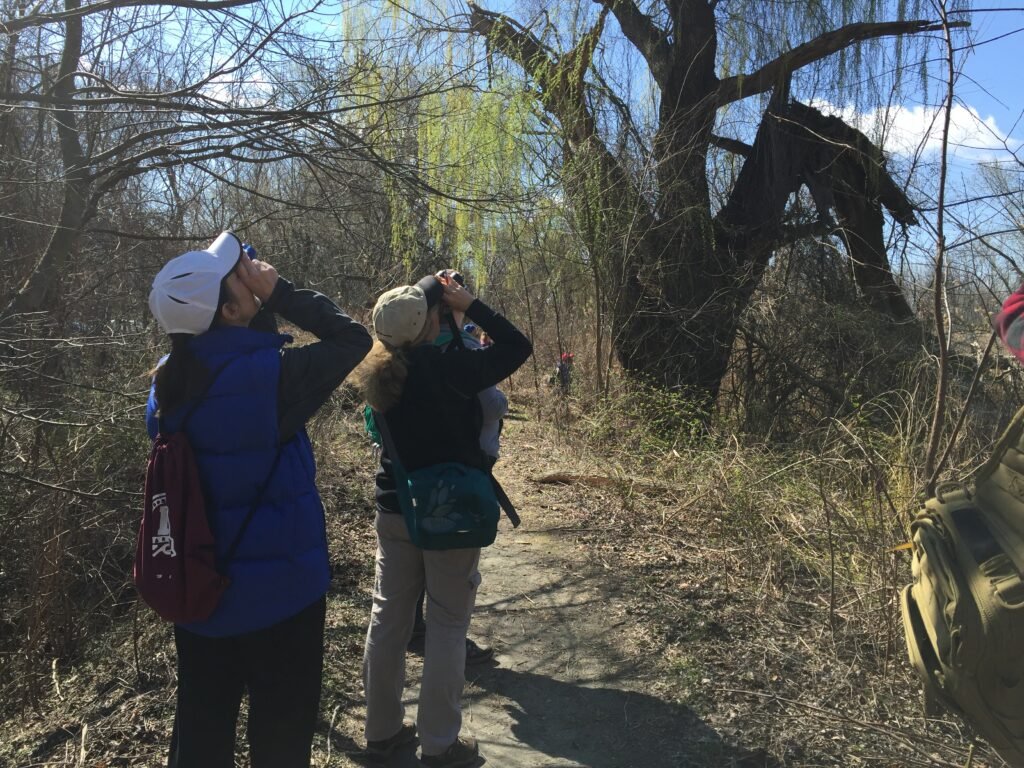
#5 Community. Lastly, I will always stress being a part of the wonderful birding community. Yes, birdwatching can be a very solitary hobby, if that’s your jam, but I will always maintain that it is more gratifying to share your adventures, and knowledge with others. There is so much to learn and share with each other. Birdwatching is having a moment right now. It is easy to find a group with a quick search on social media, or by contacting your local nature center and Audubon Society to see about any guided walks they may have scheduled. Of course you can also host your own walk with friends in a neighborhood park or trail.
An important takeaway. As you start to get to know the birds in your own yard and in your own community you begin to gain an understanding and appreciation of the beauty and complexity of their lives with each passing season. You learn that you can help support them by providing trees and flowers to help maintain their habitat. You learn that you can supply the food and shelter that they require to keep them well fed and safe. And I guarantee that you will gladly provide for them because you will no doubt fall in love with each and every one!
Happy birding!


Leave a Reply