Providing food for your backyard birds in the winter is critical for their survival. Fortunately, there are low cost, low effort, highly satisfying ways to keep your backyard beauties fed and nourished.
Here is a simple DIY Suet recipe. It takes minutes to prepare and it can be varied in any way you wish to suit your particular feathered friends. Use this as a base and add in any additional ingredients that you may need to attract the birds you want, all while supporting the birds that are already there.
Ingredients:
1 cup of peanut butter
1 cup of refined coconut oil or lard
2 cups of quick oats
2 cups of birdseed
1 cup of yellow cornmeal
1 cup of flour
Any additional add-ins: some suggestions, with links are listed below the directions
Directions:
- Start by melting the peanut butter and oil over low heat on the stove top until it liquifies.
- While this is melting, in a large bowl, mix all the other dry ingredients together.
- Remove melted PB/oil mixture from the heat and stir it into the bowl of dry ingredients.
- Spread the mixture into prepared molds, sprayed with oil, or flat trays, lined with parchment, for easy removal. The suet mixture can be pressed onto a flat sheet and sliced to fit the size of your feeder when it is firm.
- Place it in the refrigerator or freezer until it sets. When firm, suet is ready to be hung with twine or placed in your suet cage feeder.
- Store the finished Suet cakes in the freezer. This will prevent melting and keep the natural ingredients fresh.
Some Optional Add-Ins:
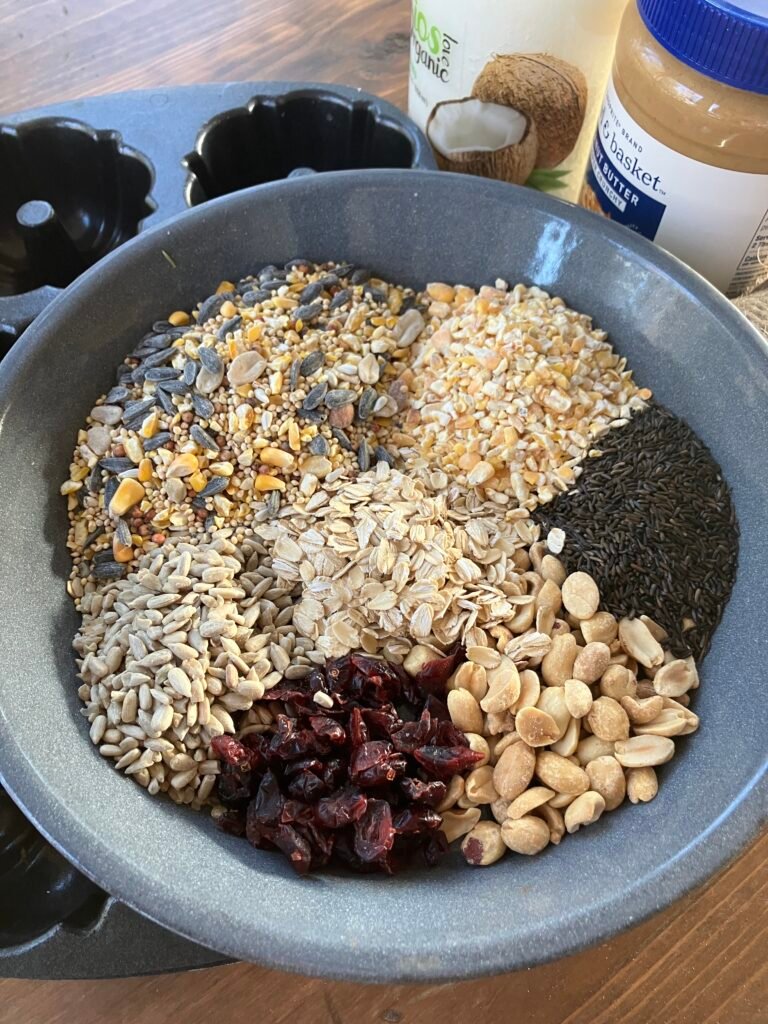
To this base you can add any multitude of dry ingredients. I will vary my mix by adding things like peanuts, cracked corn, nyjer seed, sunflower seeds, safflower seeds, apricots, cranberries, raisins and apples.
I use organic, dried, unsweetened fruit. As with any healthy diet, the less processed the better.
You can use an already blended Fruit and Nut seed mix if you do want to get each ingredient separately.
Since much of the ingredients contain no preservatives, I put out small amounts to avoid any mold. Mold can be deadly to birds so it is very important to keep the food fresh and to maintain the feeders by keeping them clean.
A Note About the Oil:
I like to use refined coconut oil because it is both organic and a vegetarian option. I use refined coconut oil because it has a higher melting point than unrefined oil. I hang my Suet cakes in a spot that is shaded for part of the day to avoid melting.
As an alternative to coconut oil you can use rendered lard from either pork or beef. Rendering means that all the meat is cooked away and all that is left is the lard. Lard does have a higher melting point than coconut oil so that is something to consider as it may be a better option if the suet will be in the sun all day.
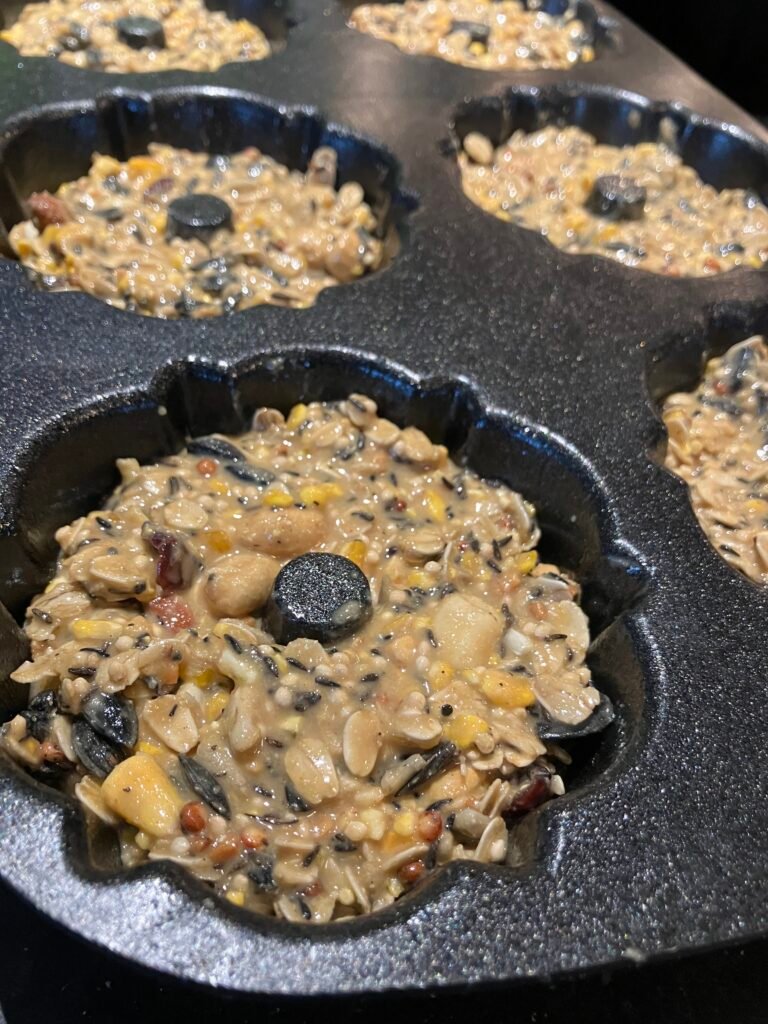
Forming the cakes:
Mini Bunt Molds are great for forming suet cakes. I knew that those pans I got 1,000 years ago for a shower gift would someday come in handy! Silicone bunt molds are perfect for the job because they are flexible. If you are using metal pans like I do, when you take them out of the freezer, you can quickly put some hot water on the reverse side and the cakes will pop right out.
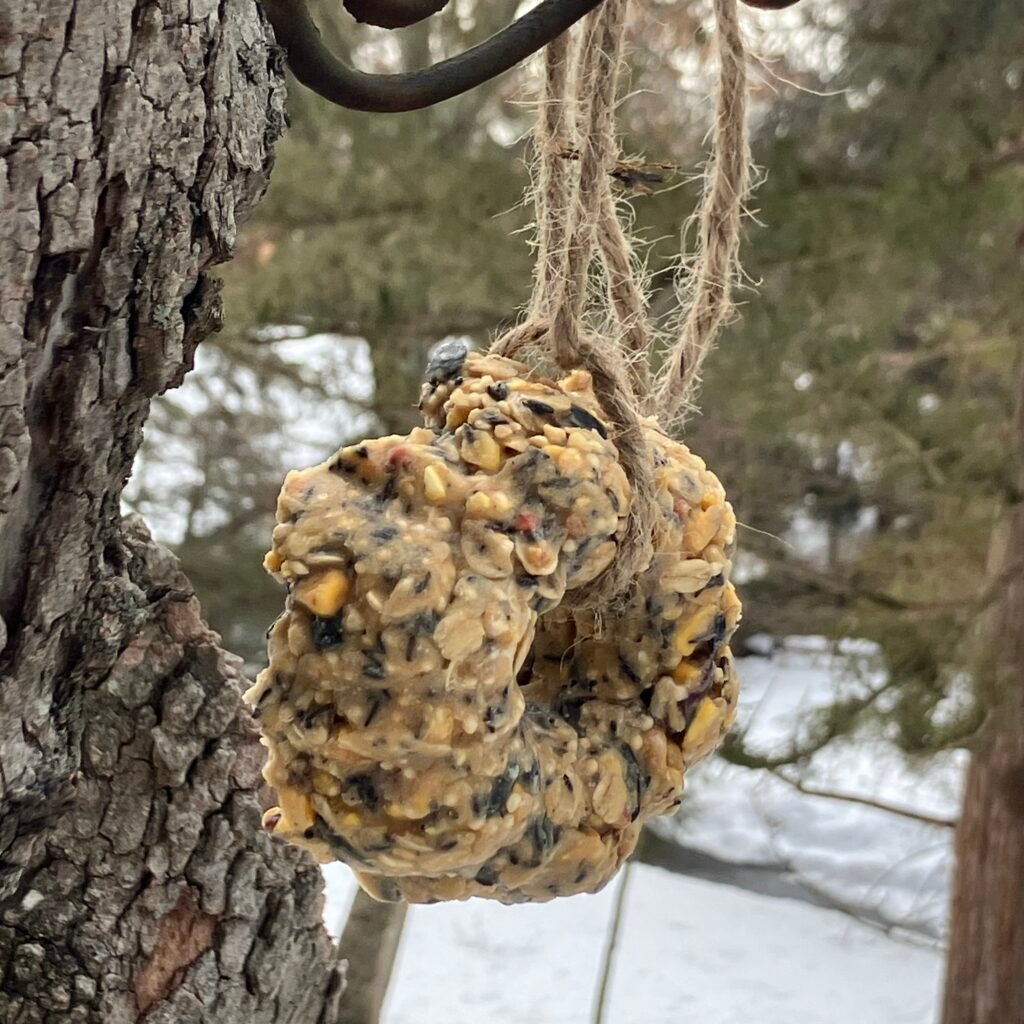
You can hang the mini bunt cakes with a piece of twine through the hole. It looks great!
Using the suet mixture as a Bark Butter is also a great option. You can soften the suet and smear a little on the bark of a tree or on a branch. I have a tree stump in my yard that I refuse to get rid of because the woodpeckers love it. I use the dead stump to feed them bark butter. It’s a great option because you don’t need to hang a feeder.
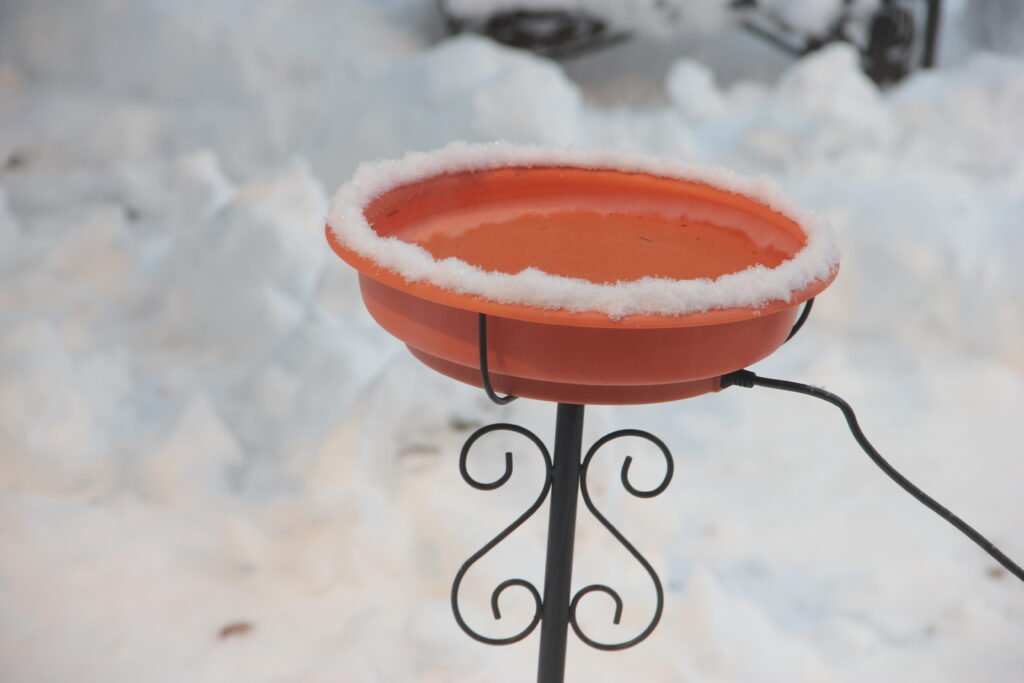
In addition to providing high caloric suet to keep the birds healthy and fed in the winter, birds should also have access to a heated bird bath. It is so difficult for birds to find a water source when everything is in a deep freeze. The heated birdbath I use is on a stand. When there is no more threat of freezing I remove the tray that has the cord attached and replace it with a different liner. The cord can be tucked away in the warmer months but I like to use the tray with the heating element only in the winter.
Birds need a high fat diet in the winter. They simply need the calories to survive. By providing them with quality food and an accessible water source you are ensuring their survival, health and well being. Of course you’ll need to be consistent with what you provide as birds will learn to rely on your yard for feeding and nourishment in every season. And just as importantly, you will most certainly come to rely on them for adding their beauty and song to your yard!